Home › Masonry Restoration and Historic Preservation
We perform historic masonry restoration in Norman, OK for landmark brick and stone buildings. Our team uses compatible materials and methods to repair façades, arches, and decorative details while preserving original character. Protect your historic property with careful, documented preservation work.
Superior Masonry Norman provides professional historic masonry restoration throughout Norman, OK, Oklahoma and the surrounding area. Our licensed, insured crew delivers safe, clean, on-time work with a free estimate before anything begins. Call (405) 288-7995 or request your free quote.
Thoughtful Masonry Restoration for Norman’s Older Homes and Buildings
Historic masonry restoration is very different from ordinary brick repair. At Superior Masonry Norman, we treat each project like a piece of local history, whether it is a 1920s bungalow near the University of Oklahoma, a mid‑century storefront in downtown Norman, or a farmhouse on the edge of town.
The first step is always documentation and assessment. We photograph all elevations, note cracks, bowing walls, spalling brick, past patchwork, and water entry points, then compare what we see to how the building likely looked originally. For many Norman properties, that means looking at older clay brick sizes and mortar profiles that were common before modern construction took over.
We then test materials on site. For older homes we may perform simple mortar hardness checks and acid tests to determine if the original mortar was lime based or a harder portland mix. This matters a lot in our climate, because using mortar that is too hard on older, softer brick can lead to more cracking during Oklahoma’s rapid temperature swings.
Throughout the process, we explain our findings in plain language and walk you around the building so you can see issues for yourself. Our goal is to restore structural integrity and appearance while keeping as much original material as possible, not to give your building a brand new, out‑of‑place look.
How Our Historic Masonry Restoration Process Works
Once we understand the existing conditions, we create a project plan tailored to your specific structure and budget. For most Norman historic masonry restoration projects, the work follows a few clear stages.
Preparation and protection come first. We protect windows, landscaping, and adjacent siding with breathable coverings. On more fragile structures, such as older sandstone details, we may build light scaffolding and limit tool vibration.
Cleaning is next, but very carefully. Instead of pressure washing at high psi, which can erode mortar and brick faces, we typically use low‑pressure water, gentle masonry detergents, and soft bristle brushes. On more delicate or heavily soiled surfaces, we may recommend poultice cleaning, which draws stains out of the masonry without aggressive scrubbing.
Repair and replacement follow. Where bricks are severely spalled, broken, or previously patched with non‑matching units, we source replacements as close as possible in size, color, and texture. In Norman, that often means tracking down regional clay brick that we can hand‑finish on site to better blend in. For stone, we look for similar grain and density so new pieces weather at a similar rate.
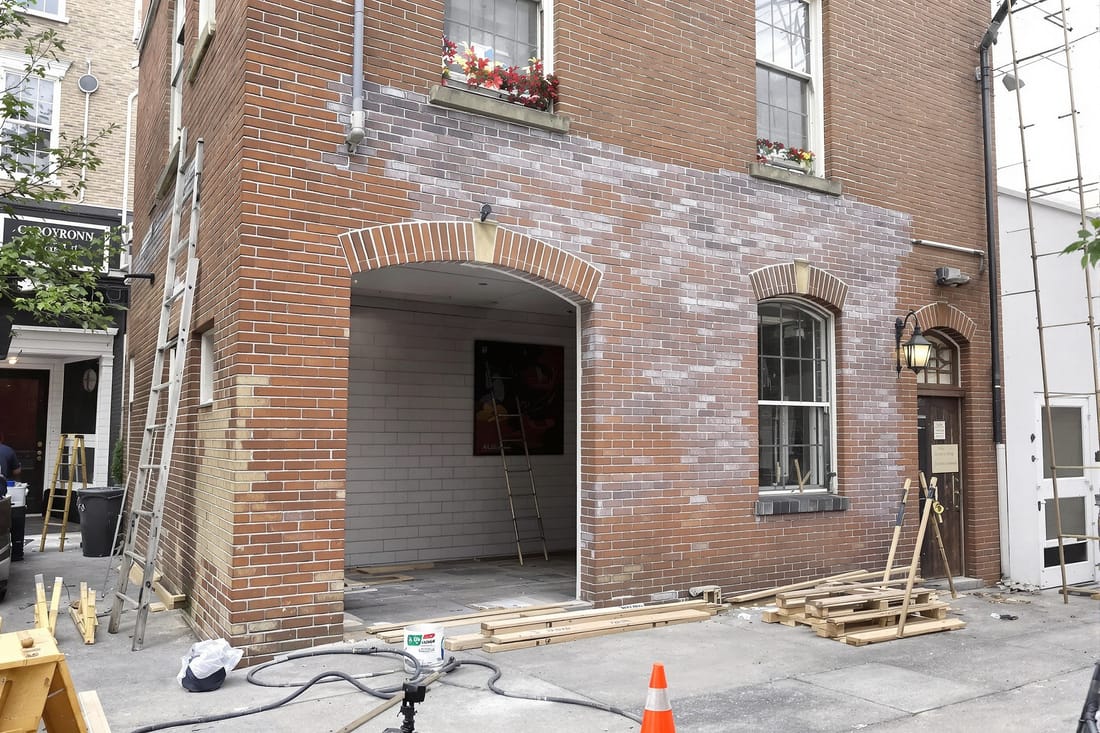
Finally, we focus on details like tooling of joints, color matching, and subtle aging techniques so repaired areas blend naturally with the existing walls. The work should quietly disappear into the building, not draw attention to itself.
Specialized Tuckpointing and Mortar Matching for Older Masonry
Repointing is the heart of most historic masonry restoration projects in Norman. Done properly, it can add decades of life to your brick or stone walls. Done poorly, it can trap moisture and accelerate damage.
We start by cutting or raking out deteriorated joints to the correct depth. For older buildings, that usually means removing at least two to three times the width of the joint, taking care not to chip the edges of softer brick. We avoid power grinding on historic facades whenever possible, since it can widen joints and damage the masonry arrises.
Next, we design a compatible mortar mix. For Norman’s older homes we often use lime‑rich mortars that remain slightly flexible and breathable, which is important in a climate with sudden freezes and intense summer heat. We adjust the sand color and gradation, test small batches on inconspicuous areas, and allow them to dry so we can refine the color match in real conditions instead of relying on wet samples.
Tooling and finish are just as important as color. We examine existing joints to see if they were originally concave, flush, struck, or weathered, and we match that profile so the repointed areas do not look patchy. On historic buildings, we also pay attention to joint width variations created by older hand‑laid brickwork, and our masons adjust their tools and techniques accordingly.
The result is a wall that sheds water effectively, allows trapped moisture to escape, and looks consistent from street level and up close.
Addressing Water, Weather, and Structural Issues in Norman’s Climate
Oklahoma’s weather is hard on masonry. Sudden temperature swings, wind‑driven rain, and expansive clay soils can cause problems that general contractors might miss. Superior Masonry Norman focuses specifically on how these local conditions affect historic masonry restoration.
We look closely for signs of moisture intrusion, such as efflorescence (white powdery deposits), flaking brick faces, and damp interior plaster near exterior walls. In many Norman houses, issues begin where downspouts discharge too close to foundations or where older masonry chimneys lack proper caps and flashing.
Our solutions might include rebuilding chimney crowns with properly sloped, reinforced concrete, installing or repairing metal flashing where roofs meet masonry, and adjusting grade or adding drainage improvements at the base of walls. We can also recommend breathable water‑repellent treatments for some historic brick and stone, but only after verifying that existing moisture can escape freely. Not every building should be sealed, and we explain the pros and cons clearly before proceeding.
For structural concerns, such as bulging walls or step‑cracking that follows mortar joints, we may tie masonry back to framing, stitch cracks with embedded reinforcement, or rebuild localized sections with careful support in place. When needed, we coordinate with structural engineers familiar with Oklahoma soil and foundation movement so that repairs address both the symptoms and the underlying cause.
Planning, Cost Factors, and Best Timing for Work in Norman
Owners are often unsure what to expect for timeline and cost on a historic masonry restoration project. We try to remove as many surprises as possible while preserving flexibility for discoveries that may surface once work begins.
Several factors drive cost: the height of the building and scaffolding needs, severity of existing damage, access for material staging, how closely replacement brick or stone must match, and whether structural corrections are required in addition to cosmetic repairs. Intricate details like corbelled brickwork, arches, or carved stone also require more time and specialized skill.
We typically recommend scheduling major exterior restoration in Norman between late March and early June, or again in late September and October. During these periods, temperatures are more stable and less likely to drop below the curing range for mortar overnight, and afternoon heat is easier to manage for both mortar workability and worker safety. Winter work is still possible with special cold weather procedures, but it can add cost for heat and protection.
Before we start, we provide a written scope that clarifies exactly which areas will be cleaned, repointed, rebuilt, or replaced. If we suspect hidden issues, such as loose backing masonry or rotted wood behind a brick veneer, we note how we will handle those findings so you are not left guessing if the plan must be adjusted mid‑project.
We also discuss access and disruptions ahead of time. For example, downtown businesses may prefer phased work that keeps an entrance open, while homeowners might want us to coordinate with painters, roofers, or window installers so exterior improvements happen in a logical order.
Why Norman Property Owners Trust Superior Masonry Norman
Choosing a contractor for historic masonry restoration is about more than getting the lowest price. You are asking someone to work on a structure that cannot be easily replaced. Superior Masonry Norman focuses on earning that trust through transparency, skill, and respect for original craftsmanship.
We are familiar with the range of masonry you see around Norman: soft, early‑20th‑century brick, denser postwar units, split‑face block, and decorative stone used on porches, chimneys, and columns. Our crews are trained to adjust their tools and mortar mixes to each material instead of applying a one‑size‑fits‑all method.
On every project, the same lead mason who prepares your bid will be on site regularly to check details, answer questions, and document progress with photos. For more intricate preservation work, we can provide before‑and‑after comparisons and maintenance recommendations so you know how to care for the restored masonry over the next decade.
We encourage property owners to ask for references for similar projects, and we can point you to local examples of our work so you can see the quality in person. Our goal is simple: when we are done, your building should look like itself again, just healthier and ready to stand up to many more Norman seasons.
If you have a brick, stone, or block structure in or around Norman that is showing its age, we are glad to walk it with you, discuss options, and suggest a restoration plan that respects both your building and your budget.