Home › Commercial Retaining Walls
We build commercial masonry retaining walls in Norman, OK for site development, parking lots, and property boundaries. Our team installs engineered CMU and block retaining systems with proper drainage and reinforcement. Depend on us for straight, stable walls that meet design and code requirements.
Superior Masonry Norman provides professional commercial masonry retaining walls throughout Norman, OK, Oklahoma and the surrounding area. Our licensed, insured crew delivers safe, clean, on-time work with a free estimate before anything begins. Call (405) 288-7995 or request your free quote.
Commercial Retaining Walls Built for Norman’s Soil and Codes
Commercial masonry retaining walls in Norman are not just about holding back dirt. They are a structural system that has to deal with clay-heavy soil, sudden Oklahoma downpours, and strict commercial codes. Superior Masonry Norman focuses on commercial sites around I-35, Campus Corner, Moore-Norman corridor, and growing retail strips along Hwy 9, where poor wall design can shut a project down or create long-term liability.
For commercial clients, we start with use and risk. Are you supporting a parking lot, loading area, drive-through lane, or a slope along a public sidewalk? Each use triggers different live-load and safety requirements. We coordinate with your civil engineer, architect, or GC to confirm design loads and any city of Norman requirements. Where needed, we can connect you with local engineers who are familiar with Cleveland County permitting so your wall design is not kicked back late in the schedule.
Our team is used to working around active businesses and campuses. That means staging material to preserve customer access, limiting dust and noise where possible, and sequencing work to keep entrances and fire lanes open. The goal is a retaining wall that does its job quietly for decades, with no surprises on inspection day.
How We Design and Plan a Commercial Retaining Wall Project
A successful commercial masonry retaining wall starts with a site-specific plan, not a generic block layout. Superior Masonry Norman begins with a detailed walk of your property. We look at slopes, drainage patterns, existing pavement cracking, and nearby structures. In Norman, the shift from red clay to fill soils can occur in just a few feet, which affects whether we recommend a gravity wall, reinforced wall with geogrid, or a cast-in-place concrete wall with masonry facing.
We then review any existing site plans, geotechnical reports, or surveys. If you do not have these, we can help you arrange basic soil testing and locate underground utilities. This is critical along older commercial corridors like Main Street or Porter Avenue, where undocumented utilities are common. Knowing where gas, water, and telecom lines run can change the wall footprint or footing depth.
During planning, we clarify design choices that affect appearance and cost. For example, a segmental block system with geogrid reinforcement may be more economical for a 6 to 12 foot wall behind a shopping center. A reinforced concrete wall with a brick or stone veneer may be better for a highly visible frontage along 24th Avenue NW or near the University of Oklahoma, where aesthetics and branding matter. We also confirm safety features like guardrails, fencing, and barrier curbs where vehicles or pedestrians are above the wall.
Material Options That Work in Norman’s Climate
Commercial masonry retaining walls rely on materials that handle Oklahoma’s temperature swings, clay movement, and stormwater. Superior Masonry Norman works with several systems so we can match the right material to your budget, appearance goals, and structural needs.
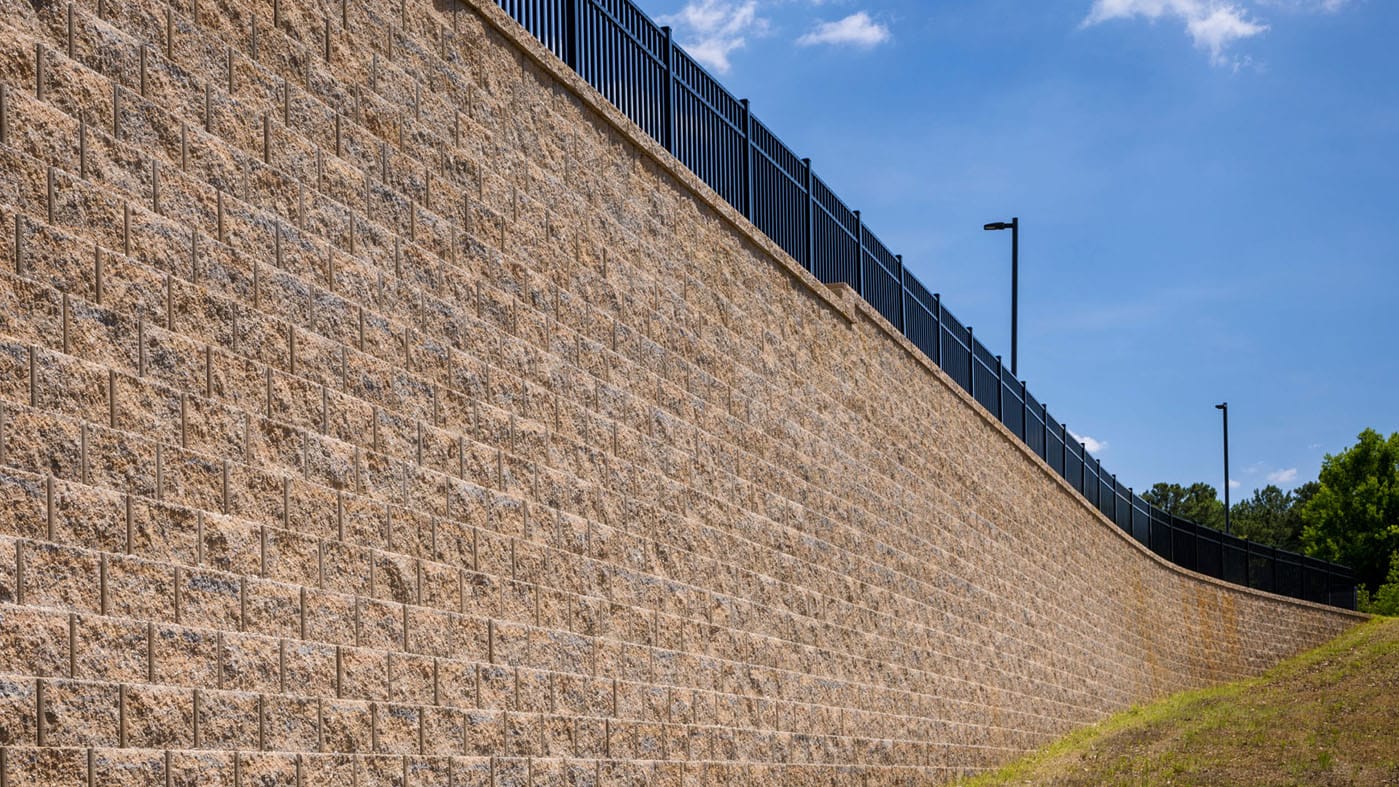
Segmental retaining wall (SRW) blocks are a common choice for shopping centers, industrial sites, and multifamily properties. These are engineered concrete units that interlock and are usually paired with geogrid reinforcement layers in the soil. For Norman’s expansive clays, we typically recommend deeper embedment and more conservative geogrid lengths than bare minimum manufacturer charts, because local soils can swell and soften after heavy rains.
Reinforced concrete walls with masonry veneer are often used along street fronts or campus projects where the owner wants a specific brick color to match existing buildings. We pour a structural concrete stem wall and footing, then apply a brick or stone veneer that aligns with existing Norman brickwork, such as red modular brick commonly seen around OU. This approach offers high strength with a clean, coordinated look.
For industrial areas or service yards, we may suggest plain concrete or a utilitarian block finish where visibility is low and durability is the priority. In every case we specify commercial-grade block, corrosion-resistant reinforcement, and drainage components that stand up to freeze-thaw cycles and high-salt runoff from winter de-icing in large parking lots.
Construction Process: What Actually Happens On Site
Once design and permits are in place, Superior Masonry Norman follows a structured build process that keeps commercial disruption to a minimum.
We start with layout and excavation. Our crew establishes wall lines, offsets, and footing dimensions, then excavates to design depth. In Norman’s clay, we pay attention to subgrade moisture. If the base becomes overly soft due to rain, we may undercut and replace with compacted aggregate or stabilized fill so the wall does not settle unevenly.
Next, we install the base. For SRW systems, that means a compacted crushed stone leveling pad. For concrete walls, we set forms and place reinforcing steel according to the engineer’s design. We routinely coordinate with inspectors from the city of Norman or project engineers for rebar and footing inspections before any concrete is poured.
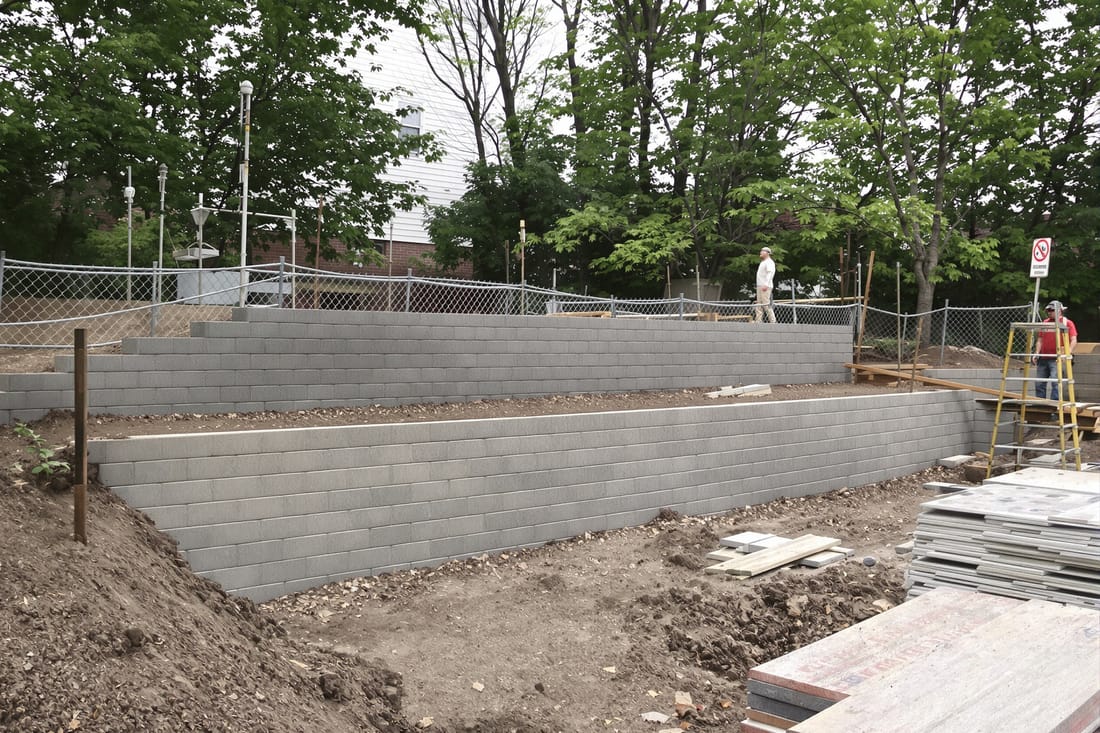
Wall construction then proceeds in lifts. For block walls, we place blocks in staggered courses, install geogrid at specified elevations, and backfill with compacted aggregate and soil in thin layers. Proper compaction is critical in this region, because loose or wet backfill behind a wall is one of the most common causes of movement and bulging. For poured walls, we place concrete, vibrate to remove air pockets, then strip forms and apply any masonry veneer.
Throughout construction, we add drainage components such as perforated drain pipe at the heel of the wall, clean granular backfill against the wall face, and weep holes or outlet points. With Norman’s intense storms, we often tie the wall drain system into site storm drains so water is directed away from buildings, sidewalks, and neighboring properties.
Cost Drivers, Common Problems, and How We Prevent Them
Commercial masonry retaining wall costs in Norman are driven by more than just height. Superior Masonry Norman explains cost factors upfront so owners and GCs can budget realistically.
Key drivers include wall height and length, soil conditions, type of wall system, access for equipment, and any architectural treatments like custom brick patterns, cap stones, or integrated signage. A straight, 4 foot tall SRW wall along a service drive is far less expensive per foot than a 10 foot tall reinforced concrete wall with brick veneer along a major frontage in a tight downtown site.
Local soil and drainage are the hidden cost variables. If the site has poor fill or old construction debris, we may need to remove and replace a significant amount of material. If there is no clear path to daylight for drainage, we might have to add buried pipes, headwalls, or tie into existing storm systems. These items add cost but are essential in Norman, where heavy rain can quickly turn a marginal design into a failed wall.
The most common problems we see in failed commercial retaining walls are lack of drainage, inadequate geogrid or rebar, poor compaction of backfill, and walls built without proper engineering at critical heights. We often get called to repair walls along parking lots that are bowing or cracking within 5 to 10 years. Our approach is to correct the root cause, not just patch the face. That can mean partial demolition, adding proper drainage, rebuilding with the correct reinforcement, and in some cases installing tie-backs or soil nails if space is constrained.
By addressing these issues in design and construction, we reduce lifetime ownership costs and the risk of damage to adjacent pavement, buildings, and landscaping.
What Norman Property Owners Should Clarify Before Hiring
Before hiring any contractor for commercial masonry retaining walls, Norman property owners should pin down several specifics in writing.
First, verify that there is a stamped engineering design for any wall that approaches or exceeds the city’s height threshold for structural review, especially where public access or vehicles are above or below the wall. Ask how the design accounts for local soil reports and what safety factors are used given Norman’s soil profile and rainfall patterns.
Second, request a clear description of the wall system, including brand of block or type of concrete, reinforcement details, drainage layout, and backfill type. You should know exactly what is behind the visible wall face. This makes future expansion or repairs easier and helps you compare proposals more accurately.
Third, make sure the proposal covers site protection and business operations. For active retail centers, medical offices, or schools, this should include traffic control, temporary barriers or fencing, dust management, and work hours. Ask about how the contractor will protect existing pavement and utilities, especially on older sites that may not have complete as-built drawings.
Finally, clarify warranty terms and what constitutes maintenance versus defect. Durable commercial retaining walls require some inspection over time, especially for drainage outlets and adjacent pavement joints. Superior Masonry Norman explains what to watch for, such as early signs of movement, clogged drains, or surface cracking, and we outline a realistic maintenance plan so your investment continues to perform long after construction is complete.